All Categories
Featured


Why Data-Driven Targeting Reduces Ad CPA
Table of Contents
While performing an use test, one of the guinea pig discussed after performing such a search and learning that it was not connected to his classification: "When I search when I remain in a category then to me it appears sensible to browse within that classification." Once we value this user context, it's simple to understand how users make this conclusion.
This is particularly important on mobile, when individuals are handling smaller screens and typically wish to see a smaller subset of product alternatives. Mobile users must have the ability to pay in a streamlined method. Throughout our functionality testing of mobile checkouts, we have actually observed that Payment Approach selection is a step where users typically experience functionality concerns.
All of those choices can be challenging to balance on a little screen, resulting in users becoming overwhelmed and baffled. Check out Baymard's annotated examples that highlight what 92 companies are doing right and wrong with their mobile payment choices, and find pointers on improving your mobile experience to get more conversions.
Landing Page Tactics for 2026 CRO
It's plainly visible and separated from the remainder of the fields, however stays collapsed to reduce the focus and decrease abandonment. Our eye-tracking test sessions validate that empty form fields draw a disproportionate quantity of user attention, and advertising fields, like "Discount coupon Code," will get noticed instantly if shown by default within the regular circulation of kind fields.
When users see the coupon field, they will typically seem like they are paying too much. As one subject mentioned: "I discover it a little frustrating that they're flashing these coupon code fields as much as they do, because it is like, 'You need to have a voucher, you could get this more affordable if you understood this code' I do not." To resolve this, collapse all discount coupon and promotional fields behind links, and place those links secondary to the action's primary function (e.g., below the credit card kind).
Although it looks comprehensive, this item description at Staples points out two sets of dimensions which are not labelled. The user is left to think what they apply to, which lowers their self-confidence in making a "right choice". Ecommerce item descriptions require to supply the exact details users are looking for, without being frustrating. Make sure misspelled inquiries do not cause functionality problems that cause users to abandon the website. The objective of conversion rate optimization is to enhance the outcomes you're getting from your present website traffic. With a solid ecommerce CRO method, you can increase the number of conversions you get, whether you're looking for more clicks, sign-ups, or sales.
Making incremental changes can lead to a significant income boost. Discover more about the UX design procedure. If you wish to enhance conversion rate, then it should be tracked! To track an ecommerce website's conversion rate, you can use a variety of analytics tools. While Google Analytics is the most popular option for website-specific data, there are numerous alternative approaches for determining this vital metric.
Essential CRO Tips for High ROI
a month or a year), divide the overall number of purchases made during that period by the total variety of visitors to your website. A number of controllable factors can influence conversion rates, such as the style of your web pages, the quality of your site material, and the prices and quality of your products or services.
If you are getting more traffic, however your conversion rate drops, this is likely due to the quality of that traffic. Sometimes higher traffic does not always correspond to more sales, indicating that where that traffic originates from, and the intent of the website visitors, matters more than the traffic number itself.
If there is a modification in the source of traffic, for example, from a social networks post that is promoting a sale, it might indicate that your conversion rate increase together with the traffic numbers. Page speed plays an essential function in conversion rates, as faster-loading pages provide a smoother user experience.
[target2:anchor_exact1]In addition to the strategies above, Baymard's comprehensive UX research can assist you improve your conversion rate and generate more sales by improving your user experience. Get Baymard Premium to get access to 700+ design standards and 275,000+ UX performance ratings insights currently used by a lot of the world's leading websites.
[target2:anchor_exact1]Conversion rate optimization (CRO) is the procedure of improving a site or digital item to increase the portion of users who complete a preferred action, whether that's buying, registering, reserving a demonstration, or moving to the next action in a funnel. Generally, CRO has actually been defined as customizing components on website pages to increase conversion rates.
Enhancing UX for Higher Conversion Rates
Due to the fact that real CRO isn't about arbitrarily tweaking buttons or rewriting headings. It has to do with comprehending user behavior, forming data-backed hypotheses, and running regulated experiments to discover what in fact works. That's where the modern view of CRO can be found in. In many organizations, CRO is treated as a marketing technique. Traffic can be found in, and the goal is to "transform more of it." Groups test headings, change CTA colors, or reduce kinds, hoping to enhance the percentage of visitors who convert.
However without structure, this technique typically turns into guesswork: small changes, irregular results, and little long-lasting learning. Which is why experienced CRO experts increasingly prefer another term: Experimentation is the procedure of screening data-driven hypotheses by running regulated experiments. Rather of asking, "How do we increase conversions?" the concern ends up being: "What do our company believe is preventing users from converting, and how can we evaluate that belief?" Experiments include changing specific components of a site or product in order to confirm (or revoke) a plainly specified hypothesis.
Among the outcomes of that knowing is typically greater conversions. But conversion lift is a by-product, not the sole function. If you want a much deeper breakdown of how structured experimentation works in practice, we've outlined it step by action in our guide to building an item experimentation framework. At its core, experimentation depends on the scientific method: Form a hypothesis based on data Style an experiment to evaluate it Run the test Analyze the outcomes Use the knowing and repeat It's less about "enhancing pages" and more about building a repeatable system for making better choices.
When CRO is minimized to "enhancing conversion rates," groups frequently: Run tests without strong hypotheses Modification aspects without measuring impact Focus just on short-term gains Overlook why a variation won or lost However when CRO is approached as experimentation, it ends up being a discipline. A way to minimize danger, replace assumptions with proof, and develop a culture where decisions are evaluated rather of discussed.
Predictive Modeling for 2026 Paid Growth
Which difference shapes everything else in this guide.

Latest Posts

Scaling PPC Success With AI

Paid Growth Marketing for Domestic Markets
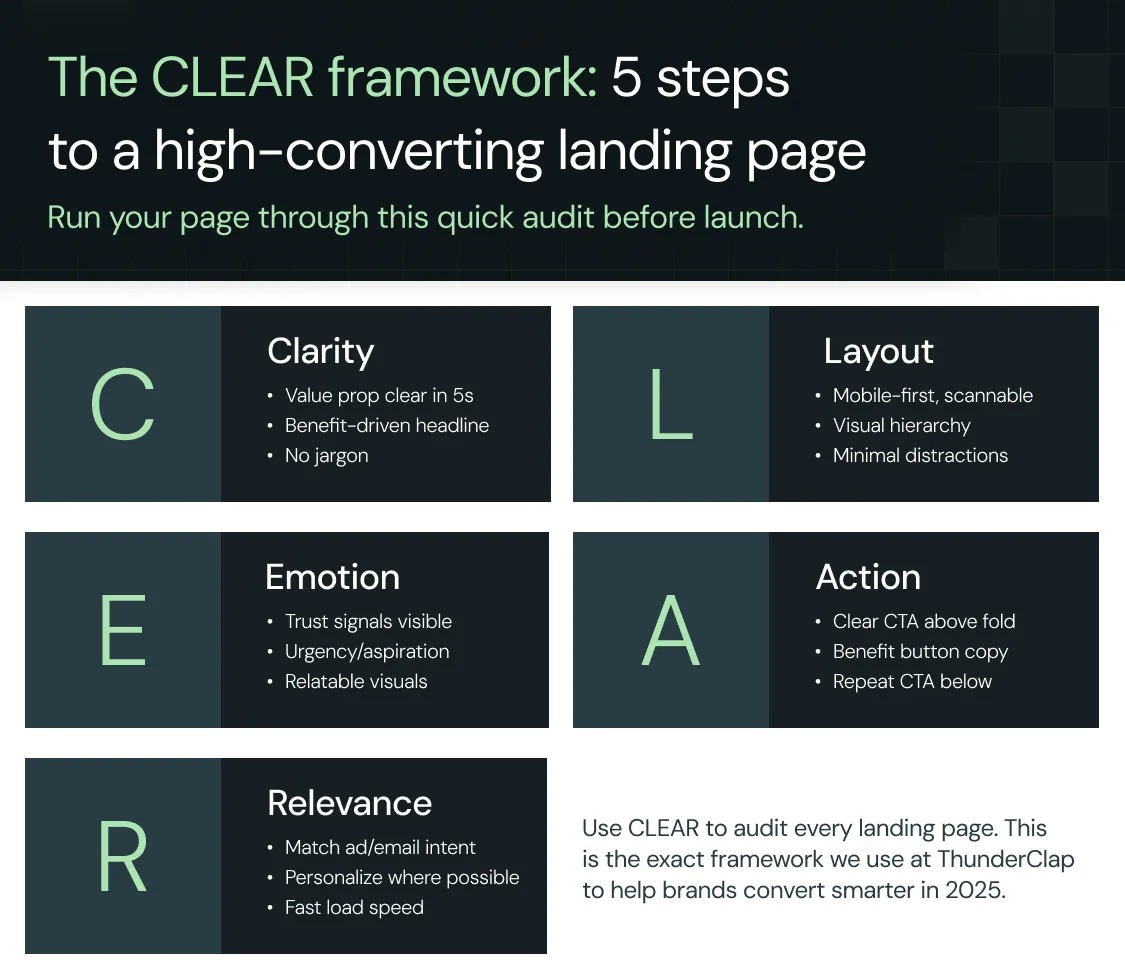
Improving Paid Growth Through CRO